Phil Babb: The Verified Journey of the Irish Defender, Liverpool Star and Football Analyst
Phil Babb: From World Cup Hero to Football Analyst
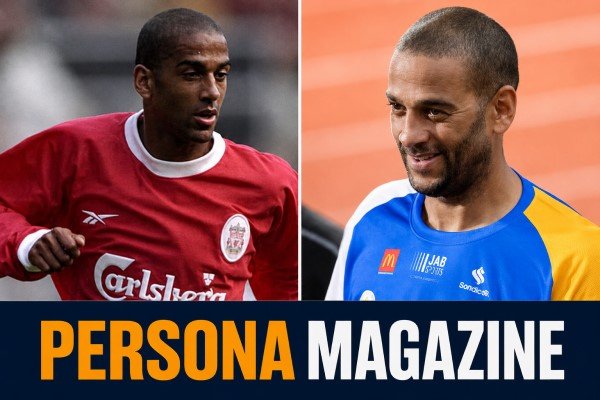
Phil Babb is remembered as one of the most recognisable defenders of 1990s British and Irish football. A London-born Republic of Ireland international, he built his career through Bradford City, Coventry City, Liverpool, Sporting CP and Sunderland. His pace, strength and reading of the game helped him become a major defensive name during the Premier League’s early years.
Babb’s career reached a major turning point after the 1994 FIFA World Cup, where he played for Jack Charlton’s Republic of Ireland. Soon after, Liverpool signed him for a record fee for a defender in Britain at the time. Today, Phil Babb remains connected to football through media appearances, interviews, punditry work and football events.
Quick Info About Phil Babb
| Category | Details |
|---|---|
| Full Name | Philip Andrew Babb |
| Known As | Phil Babb |
| Date of Birth | 30 November 1970 |
| Age | 55, as of June 2026 |
| Birthplace | Lambeth, London, England |
| International Team | Republic of Ireland |
| Position | Centre-back |
| Height | 1.83 m / 6 ft |
| Major Clubs | Bradford City, Coventry City, Liverpool, Sporting CP, Sunderland |
| Liverpool Record | 170 appearances, 1 goal |
| Ireland Caps | 35 |
| World Cup | 1994 FIFA World Cup |
| Major Honours | 1995 League Cup, Portuguese league and cup honours with Sporting CP |
| Later Work | Football pundit, media contributor, football event guest |
| Last Known Managerial Role | Hayes & Yeading United, 2013–2015 |
Who Is Phil Babb?
Phil Babb is a former professional footballer, former manager and football media personality. He played mainly as a centre-back and became known for his speed, physical presence and calm defensive style.
Although born in London, Babb represented the Republic of Ireland internationally. He became part of an important era for Irish football and played at the 1994 FIFA World Cup in the United States.
For many fans, he is best remembered for his time at Liverpool. He joined the club in September 1994 after impressing at Coventry City and on the international stage. His transfer was significant because it made him Britain’s most expensive defender at that time.
Early Life and Football Beginnings
Phil Babb was born in Lambeth, London, on 30 November 1970. He came through the youth system at Millwall, where he developed the foundations of his game. Although he did not make a senior appearance for Millwall, the experience helped him grow as a disciplined and athletic footballer.
His senior career properly began with Bradford City. At Bradford, Babb was not yet known mainly as a centre-back. He played as a midfielder and showed that he had more than one side to his game.
That early midfield experience helped him later as a defender. He was comfortable carrying the ball, reading play and stepping forward when needed.
Bradford City: The First Big Step
Babb joined Bradford City in 1990 and quickly became an important player. He scored 14 goals in 80 league appearances, a strong return for a player who would later become best known as a defender.
At Bradford, he gained regular first-team experience and showed the athletic qualities that would define his career. His performances helped him earn a move to a higher level.
This stage of his career is important because it shows how Babb developed gradually. He did not become a Premier League defender overnight. He built his reputation through consistent performances in the Football League.
Coventry City: Premier League Breakthrough
In 1992, Phil Babb moved to Coventry City. This move gave him the chance to prove himself in the top flight of English football.
At Coventry, Babb’s career took a major step forward. He became a strong Premier League performer and began to move more fully into a central defensive role. His speed and strength made him well suited to defending against quick forwards.
His time at Coventry also helped him gain international attention. After two impressive seasons, Liverpool and other major clubs were interested in him.
Republic of Ireland Career and the 1994 World Cup
Phil Babb represented the Republic of Ireland between 1993 and 2002 and earned 35 international caps. His biggest international moment came at the 1994 FIFA World Cup in the United States.
Babb played in all four of Ireland’s matches at the tournament. That experience placed him on a global stage and helped raise his profile in club football.
The 1994 World Cup was also important for Irish football. Ireland defeated Italy in one of the tournament’s most memorable results and reached the knockout stage. Babb’s role in the defence helped him become a respected name among Ireland supporters.
In June 2026, Sky Sports published a fresh interview with Babb in which he looked back on the extreme heat and preparation around USA 1994. That interview brought renewed attention to his international career and showed that his memories of the tournament still interest football fans today.
Liverpool Career: A Record-Breaking Move
Phil Babb joined Liverpool from Coventry City in September 1994. At the time, his £3.6 million move was reported as a record transfer fee for a defender in Britain.
Liverpool were rebuilding under Roy Evans, and Babb was seen as a player who could add pace and quality to the defence. He arrived with Premier League experience and World Cup exposure, making him one of the most talked-about defensive signings of that period.
Liverpool Appearances and Role
Babb played 170 matches for Liverpool in all competitions and scored one goal. He became a regular part of the team during the mid-1990s.
He was known for being quick across the ground and strong in the air. These qualities were valuable in a league that was becoming faster and more physically demanding.
His only Liverpool goal came against former club Coventry City. Although he was not a goal-scoring defender, his main value was his defensive work, recovery pace and ability to cover dangerous spaces.
1995 League Cup Success
One of the biggest honours of Babb’s Liverpool career was winning the 1995 League Cup. Liverpool defeated Bolton Wanderers in the final, and the trophy became a key achievement of his time at Anfield.
For Babb, that success confirmed that he had made the step from promising defender to trophy-winning player at one of England’s biggest clubs.
Tranmere Rovers Loan and Liverpool Exit
In January 2000, Phil Babb joined Tranmere Rovers on loan for a short spell. His Liverpool career was coming to an end by that point, with competition for defensive places increasing.
Liverpool released him in the summer of 2000. Although his later years at Anfield were affected by injuries and changes in selection, his overall record remains strong. More than 150 appearances for Liverpool is a significant achievement for any player.
Sporting CP: Success in Portugal
After leaving Liverpool, Babb moved abroad to join Sporting CP in Portugal. This was an important chapter because it gave him experience in a different football culture.
At Sporting, Babb was part of a successful period for the club. He is listed among the squad honours for the 2001–02 Portuguese league title and the Portuguese Cup. He is also associated with a Portuguese Super Cup honour.
Playing in Portugal added another layer to his career. It showed that Babb could adapt outside English football and contribute in a different tactical environment.
Sunderland and Retirement
Phil Babb returned to English football with Sunderland in 2002. He played 48 league matches for the club before retiring in 2004.
By the time he arrived at Sunderland, Babb was an experienced defender who had played in the Premier League, at international level and in European football. His experience made him valuable in the dressing room as well as on the pitch.
He retired from professional playing at the age of 33, ending a career that had included more than a decade of senior football.
Coaching and Management Career
After retirement, Babb moved into football management for a period. In May 2013, he was appointed manager of Hayes & Yeading United.
The role gave him a chance to work on the tactical and leadership side of football. His time with the club lasted until February 2015.
There is no strong public evidence of a current club coaching role after Hayes & Yeading. For that reason, it is more accurate to describe him today as a former manager and football media figure rather than an active football manager.
Phil Babb Today: Media Work and Football Events
Phil Babb remains connected to football through punditry, interviews and public football events. He has appeared in media discussions about Liverpool, the Republic of Ireland and major tournaments.
His 2026 Sky Sports interview about the 1994 World Cup is a recent example of his continued public presence. In that interview, he reflected on the physical challenge of playing in the heat at USA 1994 and the preparation Ireland used before the tournament.
Babb has also been linked with football camps and Masters-style football events. These appearances keep him connected with fans and younger players who want to learn from former professionals.
Personal Life
Phil Babb keeps much of his personal life away from the spotlight. Reliable public sources focus mainly on his football career, international record, management spell and media work.
For that reason, claims about his private family life, partner, children or personal finances should be treated carefully unless supported by reliable sources. A verified article should not include guesses about his private life.
Phil Babb’s Legacy
Phil Babb’s legacy is built on consistency, adaptability and achievement. He moved from Bradford City to Premier League football, became an international defender for Ireland, played at the World Cup and earned a major move to Liverpool.
At Liverpool, he became part of a memorable 1990s team and won the 1995 League Cup. At Sporting CP, he added Portuguese honours to his career. With Ireland, he remains linked to the proud 1994 World Cup campaign.
His journey also shows how football careers can evolve. Babb went from player to manager, then into media and football events. Even years after retirement, he remains a familiar name to Liverpool and Republic of Ireland fans.
FAQs About Phil Babb
Who is Phil Babb?
Phil Babb is a former professional footballer who played as a centre-back. He represented the Republic of Ireland and played for clubs including Bradford City, Coventry City, Liverpool, Sporting CP and Sunderland.
What position did Phil Babb play?
Phil Babb mainly played as a centre-back. Earlier in his career at Bradford City, he also played in midfield.
How many caps did Phil Babb win for Ireland?
Phil Babb earned 35 caps for the Republic of Ireland between 1993 and 2002.
Did Phil Babb play in the World Cup?
Yes. Phil Babb played for the Republic of Ireland at the 1994 FIFA World Cup in the United States. He appeared in all four of Ireland’s matches at the tournament.
When did Phil Babb join Liverpool?
Phil Babb joined Liverpool from Coventry City in September 1994.
How many appearances did Phil Babb make for Liverpool?
Phil Babb made 170 appearances for Liverpool in all competitions and scored one goal.
Did Phil Babb win trophies?
Yes. He won the 1995 League Cup with Liverpool. He was also part of Sporting CP’s successful period in Portugal, including league and cup honours.
What is Phil Babb doing now?
Phil Babb is not publicly listed as holding a current club management role. He remains active around football through media work, interviews, punditry and football-related events.
Conclusion
Phil Babb’s career is the story of a defender who rose from Football League beginnings to World Cup football and a record-breaking Liverpool move. His journey included major clubs, international recognition and trophies in both England and Portugal.
Today, he is best described as a former Republic of Ireland international, former Liverpool defender, former manager and football media personality. His name remains respected because of his achievements, his role in Ireland’s 1994 World Cup campaign and his lasting connection to Liverpool history.