Mark Dunford: The British Painter Known for Light, Observation, and Thoughtful Contemporary Art
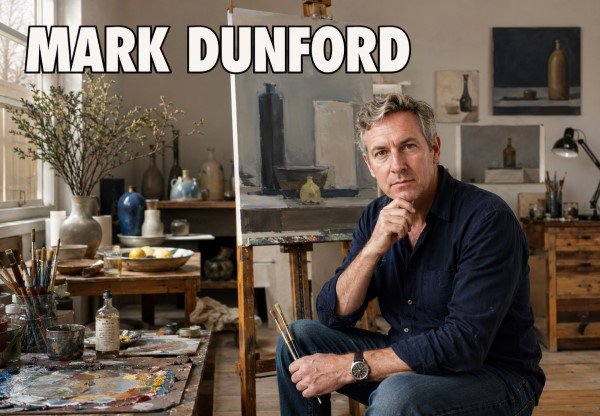
Mark Dunford is a contemporary British painter known for his careful observation, strong sense of light, and thoughtful approach to painting. His work is deeply connected with the act of looking. Instead of creating quick visual impressions, Dunford studies his subjects with patience and discipline, allowing light, space, colour, and form to guide the final painting.
In the modern art world, where digital references and fast visual content are common, Mark Dunford represents a slower and more meaningful way of making art. His paintings remind viewers that ordinary scenes can become powerful when they are seen carefully. Whether he paints interiors, still life, figures, or landscapes, his work carries a quiet strength and emotional depth.
Born in Dorset, England, in 1964, Dunford has developed a respected career as a painter, teacher, and member of the British art community. He lives and works in Cornwall, where his artistic practice continues to grow through exhibitions, painting, drawing, and teaching.
Who Is Mark Dunford?
A Contemporary British Painter
Mark Dunford is a British artist whose work is strongly rooted in observational painting. He is best known for painting directly from his subject and exploring how light and space affect what we see. His work does not depend on dramatic effects or unnecessary decoration. Instead, it focuses on careful structure, visual truth, and the emotional atmosphere of a scene.
Dunford studied at Bournemouth and Poole College of Art before continuing his education at the Slade School of Fine Art, University College London. His time at the Slade helped shape his disciplined approach to drawing, painting, and visual study.
A Painter with Strong Artistic Training
Mark Dunford’s education gave him a strong foundation in traditional and observational methods. At the Slade, he studied in an environment known for serious drawing and painting from life. This background influenced his lifelong interest in the relationship between seeing and painting.
His work reflects the importance of drawing, measurement, colour balance, and close attention to appearances. These qualities have helped him build a respected position among contemporary painters who value skill, patience, and visual honesty.
Mark Dunford’s Artistic Style
Observation-Based Painting
The most important feature of Mark Dunford’s art is observation. He works directly from what he sees, allowing the subject to slowly reveal its structure, light, and feeling. This method requires time and focus. It is not about copying a subject mechanically, but about understanding it deeply.
Through observation, Dunford captures more than the surface of things. His paintings show how light changes a room, how objects relate to each other, and how space can create mood. This makes his work feel calm, intelligent, and emotionally meaningful.
Use of Light and Colour
Light plays a central role in Dunford’s paintings. He studies how light falls across surfaces, how it changes colour, and how it creates depth. His paintings often feel quiet and atmospheric because light is treated as an essential part of the subject.
Colour is also important in his work. Dunford does not use colour only for beauty. He uses it to create structure, feeling, and harmony. His colour choices often give his paintings a subtle emotional power.
Space, Structure, and Composition
Mark Dunford’s paintings are carefully composed. He pays attention to how forms are placed within the picture and how the viewer’s eye moves through the image. This gives his work a strong sense of order without making it feel stiff or artificial.
His compositions often feel balanced and natural. The viewer can sense that every object, shadow, and colour has a purpose. This careful structure is one reason his paintings are respected by artists, students, and collectors.
Career, Recognition, and Exhibitions
Awards and Artistic Recognition
Mark Dunford has received recognition through awards and professional achievements during his career. These include respected painting-related awards connected with established art institutions. Such recognition shows that his work has been valued not only by audiences but also by serious art organizations.
He is also an elected member of The London Group, one of the United Kingdom’s historic artist groups. This membership adds to his credibility as a serious contemporary British artist.
Gallery Representation
Mark Dunford is associated with respected galleries in the United Kingdom, including Tregony Contemporary in Cornwall and Browse & Darby in London. Gallery representation is important because it helps artists present their work professionally to collectors, curators, and wider audiences.
His connection with these galleries shows that his work has a recognized place within the contemporary British art scene.
Recent Exhibition Activity
One of Mark Dunford’s recent public exhibitions was “In Situ” at Tregony Contemporary in 2025. This exhibition presented new paintings and reflected his continuing interest in place, presence, and observation.
The exhibition also connected with the revised and expanded version of the monograph “Mark Dunford: Into the Light,” which focuses on his artistic practice and development. This recent activity shows that Dunford remains active and relevant in the contemporary art world.
Teaching and Influence
Role as an Art Educator
In addition to being a painter, Mark Dunford is also involved in teaching. His workshops and teaching activities focus on drawing, painting, light, colour, and visual understanding. His experience as a working artist gives students valuable insight into the discipline of observation-based painting.
Dunford’s teaching is especially useful for artists who want to improve their ability to see clearly and build stronger compositions. His approach encourages students to slow down, look carefully, and develop confidence in direct observation.
Workshops and International Activity
Mark Dunford has also been connected with international art workshops. A 2026 Italy workshop lists him as an instructor alongside Kay Vinson, focusing on interior and exterior light and spaces in the Umbrian landscape. This type of teaching shows his continuing influence beyond the studio and gallery.
Through workshops, Dunford shares his knowledge with artists from different backgrounds and skill levels. This makes his contribution valuable not only as a painter but also as a mentor.
Why Mark Dunford Matters Today
A Bridge Between Tradition and Contemporary Art
Mark Dunford matters because he keeps observational painting alive in a modern context. His work proves that traditional methods can still feel fresh, serious, and relevant. He does not reject the past, but he also does not simply repeat it. Instead, he uses observation as a living practice.
His paintings connect classical discipline with contemporary sensitivity. This makes his work meaningful for people who appreciate both technical skill and emotional depth.
A Reminder to Look More Carefully
In today’s fast digital world, people often see images quickly and move on. Mark Dunford’s work encourages slow looking. His paintings remind viewers that light, space, and ordinary subjects can become powerful when given proper attention.
This is one reason his art feels valuable today. It teaches viewers that seeing is not passive. Seeing can be thoughtful, emotional, and creative.
Quick Info About Mark Dunford
| Category | Details |
|---|---|
| Full Name | Mark Dunford |
| Birth Year | 1964 |
| Birthplace | Dorset, England |
| Profession | Painter and Art Educator |
| Nationality | British |
| Known For | Observational painting, light, colour, space, and composition |
| Education | Bournemouth and Poole College of Art; Slade School of Fine Art, UCL |
| Current Base | Cornwall, United Kingdom |
| Art Style | Contemporary observational painting |
| Membership | Elected member of The London Group |
| Recent Exhibition | “In Situ” at Tregony Contemporary |
| Related Work | Teaching, workshops, painting, and drawing |
FAQs About Mark Dunford
Who is Mark Dunford?
Mark Dunford is a contemporary British painter known for observation-based painting and his sensitive use of light, colour, space, and structure.
What is Mark Dunford famous for?
He is best known for paintings created through direct observation. His work often explores how light and space shape the way we see interiors, objects, figures, and landscapes.
Where was Mark Dunford born?
Mark Dunford was born in Dorset, England, in 1964.
Where does Mark Dunford live and work?
He lives and works in Cornwall, United Kingdom.
What type of art does Mark Dunford create?
He creates contemporary observational paintings. His work often includes interiors, still life, figures, and landscapes.
Is Mark Dunford still active?
Yes, Mark Dunford remains active as a painter and teacher. His recent public activity includes exhibitions and teaching workshops.
Is Mark Dunford connected with The London Group?
Yes, Mark Dunford is an elected member of The London Group.
Why is Mark Dunford important?
He is important because he continues the tradition of observational painting while keeping it relevant in contemporary art. His work encourages careful looking, patience, and serious artistic practice.
Conclusion
Mark Dunford is a respected British painter whose work is built on observation, discipline, and sensitivity to light and space. His paintings are not only visual images; they are careful studies of how we experience the world around us.
From his early education at Bournemouth and Poole College of Art and the Slade School of Fine Art to his current practice in Cornwall, Dunford has remained committed to serious painting. His exhibitions, gallery representation, teaching work, and continued public activity show that he holds an important place in contemporary British art.
For readers interested in modern painting, observational art, or British artists, Mark Dunford is a meaningful figure to know. His work reminds us that art is not only about making pictures. It is also about learning how to see with patience, honesty, and depth.