Jacqueline Harpman Biography: Life, Books and Legacy
The Remarkable Life and Lasting Legacy of a Literary Icon
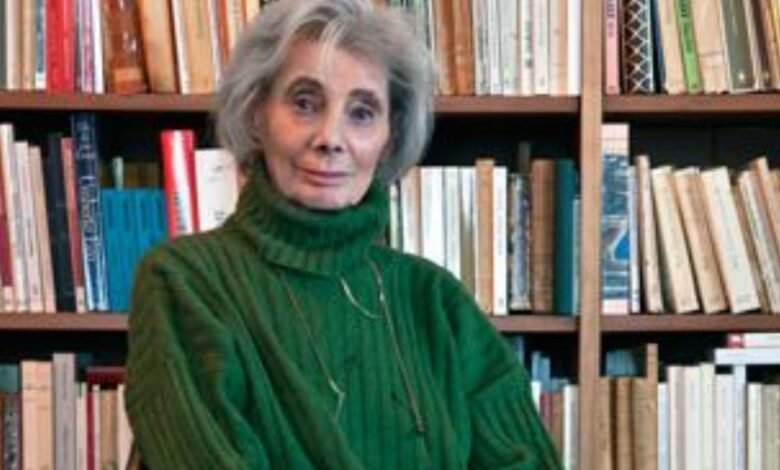
Jacqueline Harpman was a Belgian novelist and psychoanalyst whose unusual life and psychologically rich writing have earned her renewed international attention years after her death. Born in Brussels in 1929, she lived through the disruption of the Second World War, survived tuberculosis, abandoned medical studies, built a successful literary career, and later qualified as a psychoanalyst. Her fiction often explored identity, confinement, memory, desire, gender and female independence. Among her best-known works is I Who Have Never Known Men, a haunting dystopian novel first published in 1995 that later found a new audience through English translation and online reading communities. Her novel Orlanda won the Prix Médicis in 1996, cementing her reputation as an important Belgian French-language writer. Today, her work continues to attract readers interested in feminist literature, speculative fiction and psychological storytelling.
Quick Facts About Jacqueline Harpman
| Fact | Details |
|---|---|
| Full Name | Jacqueline Harpman |
| Born | 1929 |
| Birthplace | Etterbeek, Brussels, Belgium |
| Died | 2012 |
| Age at Death | 82 |
| Nationality | Belgian |
| Profession | Novelist and psychoanalyst |
| Writing Language | French |
| Literary Career | Began publishing in the 1950s |
| Psychoanalysis | Qualified as a psychoanalyst in 1980 |
| Famous Novel | I Who Have Never Known Men |
| Award-Winning Novel | Orlanda |
| Major Award | Prix Médicis, 1996 |
| Known For | Psychological, feminist and speculative fiction |
Early Life and Background
Jacqueline Harpman was born in 1929 in Etterbeek, Belgium, into a Jewish family. Her childhood was shaped by the political turmoil of Europe during the Second World War, an experience that later provided important context for her interest in displacement, isolation and survival.
When Nazi Germany invaded Belgium, Harpman’s family fled to Casablanca, Morocco. They remained there during the war before eventually returning to Belgium after the conflict ended.
The experience of leaving home and living under difficult circumstances became part of the broader emotional background of her life. While it would be too simple to claim that every element of her fiction was autobiographical, themes such as exile, uncertainty, confinement and separation repeatedly appear in her novels.
After returning to Belgium, Harpman developed a strong interest in literature. She was particularly drawn to classical French literature and eventually studied French literature before beginning medical training.
Her plans for a medical career, however, did not last. She contracted tuberculosis and was unable to complete her medical studies. This major interruption eventually helped redirect her life toward writing.
Her Age and Physical Features
Jacqueline Harpman was born in 1929 and died in Brussels in 2012 at the age of 82. Her life therefore spanned a period of enormous cultural and social change, from the years surrounding the Second World War to the beginning of the digital era.
There is limited reliable public information about specific physical measurements such as her height, weight or eye colour. Because those details are not central to her literary significance and are not consistently documented by authoritative sources, they should not be presented as confirmed facts.
Photographs from her later years show a distinctive literary presence, but Harpman’s public identity was primarily connected with her writing and psychoanalytic work rather than celebrity-style publicity.
Career and Major Achievements
Harpman began writing seriously in the 1950s, and her first published work appeared in 1958. Her early novel Brève Arcadie received the Prix Rossel in 1959, giving her an important early place in Belgian literature.
After publishing several works, she stepped away from fiction for an extended period and turned toward psychology and psychoanalysis. She later returned to literature with renewed creative energy.
Her second literary period produced several acclaimed novels, including La Fille démantelée, La Plage d’Ostende, I Who Have Never Known Men and Orlanda. In 1996, Orlanda won the Prix Médicis, shared with Jean Rolin’s L’Organisation.
Harpman ultimately wrote more than 15 novels and remained active in both literature and psychoanalysis.
Jacqueline Harpman’s Literary Style
One of the most interesting aspects of Harpman’s writing is the way she combines imaginative storytelling with psychological investigation.
Her characters are often placed in unusual or restrictive situations, but the real drama happens inside their minds. Instead of simply asking what happens next, her books frequently ask why people behave as they do and how their identities are shaped by memory, relationships and social expectations.
Her psychoanalytic background added another dimension to this approach. Harpman was interested in hidden desires, internal conflicts and the parts of personality that people may struggle to recognise.
This made her novels intellectually challenging without preventing them from being emotionally engaging.
I Who Have Never Known Men
I Who Have Never Known Men is arguably the work that has introduced Harpman to the largest international audience.
First published in French in 1995, the novel centres on a group of women imprisoned underground. The youngest prisoner has no clear memory of the outside world, leaving her to discover the meaning of society, relationships and freedom from an extraordinary position of ignorance.
The novel does not provide easy answers. Instead, Harpman creates a mysterious setting that allows readers to think about humanity from the perspective of someone who has never experienced ordinary human life.
The story examines loneliness, gender, power, survival and the meaning of freedom. Its deliberately unsettling atmosphere has helped it remain relevant to modern readers.
The English translation by Ros Schwartz played a significant role in expanding its international readership. Transit Books describes it as Harpman’s first novel translated into English and notes that it was originally published under the title The Mistress of Silence.
Why I Who Have Never Known Men Became So Popular Again
Harpman’s literary reputation has experienced a remarkable revival in recent years.
The renewed interest in I Who Have Never Known Men demonstrates how older books can find entirely new audiences through translation, online recommendations and changing cultural interests.
Readers have been particularly drawn to its feminist themes and dystopian premise. The novel’s focus on women living under extreme restrictions has also made it attractive to readers exploring contemporary discussions about gender, autonomy and power.
Its revival is especially notable because it happened long after the author’s death. Rather than being remembered only as an established twentieth-century writer, Harpman has become a discovery for a younger generation of readers.
Orlanda and the Prix Médicis
Another essential book in her career is Orlanda, published in 1996.
The novel explores identity, gender and desire through a surreal psychological premise. Its central character, Aline, experiences a division of identity involving a young man named Lucien. The story allows Harpman to examine the relationship between body, personality, desire and social expectations.
The novel also draws inspiration from Virginia Woolf’s Orlando, while taking the idea of transformation in a distinctly Harpman-like direction.
Orlanda won the prestigious Prix Médicis in 1996, sharing the award with Jean Rolin. The prize represented one of the most important achievements of Harpman’s literary career.
Other Important Books
Harpman’s bibliography extends well beyond her two most internationally recognised novels.
Her works include Brève Arcadie, L’Apparition des esprits, Les Bons Sauvages, La Mémoire trouble, La Fille démantelée, La Plage d’Ostende, La Dormition des amants, Passage des éphémères, En toute impunité and Du côté d’Ostende.
Her publisher Grasset lists several of these later novels and identifies Orlanda as the work that won the Prix Médicis in 1996.
This range demonstrates that Harpman was not simply a dystopian novelist. She worked across psychological fiction, literary experimentation, family stories and imaginative explorations of identity.
Relationship With Emile Degelin
Harpman’s personal life was considerably less public than her literary career. Available biographical records indicate that she was married to Belgian filmmaker Emile Degelin.
The marriage took place in 1953 and ended in divorce in 1962.
Beyond this information, Harpman generally remains better documented as a writer and psychoanalyst than as a public figure whose private relationships were extensively discussed.
Marriage and Family Life
Harpman’s marriage to Emile Degelin was part of her early adult life, but she did not build her public identity around her family relationships.
Her biography is primarily remembered through her books, intellectual interests and professional work. The wartime experience of her family and her later professional development are more consistently documented than many details of her private household.
For that reason, it is important to distinguish documented biographical information from unsupported claims about her family life.
Social Media Presence
Jacqueline Harpman did not have a personal social media presence during her lifetime because major platforms such as Facebook, Instagram and TikTok emerged after much of her career had already taken place.
However, her books have gained visibility through modern online reading communities. Readers discussing I Who Have Never Known Men and other works have helped introduce her writing to people who may never have encountered twentieth-century Belgian literature before.
This posthumous digital attention is an interesting part of her legacy. In a sense, modern readers have created a new public conversation around an author who never experienced the social-media era herself.
Who Is Jacqueline Harpman?
Jacqueline Harpman was a Belgian novelist and psychoanalyst who successfully combined literary imagination with psychological insight.
Her life followed an unusual path. She began with an interest in literature and medicine, was forced to abandon medical training after tuberculosis, became a writer, later trained in psychoanalysis and eventually returned to major literary success.
She is particularly important because her books challenge conventional assumptions about identity and freedom.
Rather than simply telling readers what to think, Harpman often places characters in extraordinary circumstances and allows the resulting psychological questions to unfold through the story.
That approach has helped her fiction survive changing literary fashions.
Personality and Interests
Descriptions of Harpman’s career suggest an intellectually curious person with a strong interest in literature, psychology and human behaviour.
Her early enthusiasm for classical literature was an important part of her development as a writer. Later, her decision to study psychology and psychoanalysis demonstrated an enduring fascination with the inner life.
Her novels reveal an interest in questions that are difficult to answer: What makes someone who they are? How much of identity is created by society? What happens when familiar rules disappear? Can someone truly understand freedom without having experienced it?
These questions became recurring features of her literary imagination.
Net Worth and Income
There is no reliable public figure for Jacqueline Harpman’s personal net worth.
Unlike contemporary celebrities and business personalities, Harpman did not publicly disclose detailed financial information. Her income would have come primarily from her literary work, publishing contracts, royalties and professional career as a psychoanalyst.
Her books were published across several decades, and some achieved significant critical recognition. However, it would be misleading to estimate a precise fortune without documented financial records.
Her true legacy is therefore better measured through her literary influence, awards and continuing readership than through an estimated net worth.
Public Image and Legacy
During her lifetime, Harpman became recognised as an important Belgian French-language writer. Her Prix Médicis win for Orlanda represented a major milestone and helped establish her among prominent literary voices of her generation.
Her legacy has become even more interesting since her death.
The renewed popularity of I Who Have Never Known Men has brought her work to a much younger international readership. The novel’s themes of confinement, female autonomy and survival feel particularly relevant to contemporary discussions about dystopian literature and women’s writing.
Her publisher Hachette describes her as one of the major voices of twentieth-century Belgian Francophone literature and notes that I Who Have Never Known Men has become an international phenomenon, with translations planned or published in numerous countries.
Harpman’s legacy also lies in the unusual combination of careers she created. She was not simply a novelist who happened to study psychology. Her experience as a psychoanalyst became part of the intellectual foundation of her fiction.
That combination helped produce stories that are imaginative on the surface but psychologically complex underneath.
Why Jacqueline Harpman Matters Today
The continuing interest in Harpman’s work shows that literary relevance does not always follow a straight path.
An author can be respected during her lifetime, become less visible after death and then experience an extraordinary revival decades later. Harpman’s story is a powerful example of this process.
Modern readers are rediscovering her because her central concerns remain universal. Questions about identity, freedom, gender, isolation and human connection do not belong to one particular generation.
Her writing also demonstrates the value of translated literature. By reaching readers beyond the French-speaking world, her novels have become part of a much larger international literary conversation.
Conclusion
Jacqueline Harpman left behind a literary career that was as unusual as it was influential. From her childhood during wartime and interrupted medical education to her work as a novelist and psychoanalyst, her life was shaped by experiences that encouraged her to explore the complexities of human identity.
Her major works, especially I Who Have Never Known Men and Orlanda, demonstrate her ability to combine philosophical questions with compelling storytelling. Orlanda earned the Prix Médicis in 1996, while I Who Have Never Known Men has achieved an extraordinary posthumous international revival.
Perhaps the most remarkable part of her story is that a writer who died in 2012 continues to find new readers today. Her books remain powerful because they ask timeless questions about freedom, identity, memory and what it means to be human.
8 FAQs About Jacqueline Harpman
1. Who was Jacqueline Harpman?
Jacqueline Harpman was a Belgian novelist and psychoanalyst known for French-language literary fiction exploring psychology, identity, gender, memory and confinement.
2. When was Jacqueline Harpman born?
She was born in 1929 in Etterbeek, Brussels, Belgium.
3. How old was Jacqueline Harpman when she died?
She was 82 years old when she died in Brussels in 2012.
4. What is Jacqueline Harpman best known for?
She is best known internationally for I Who Have Never Known Men, a dystopian novel originally published in French in 1995.
5. Did Jacqueline Harpman win a major literary award?
Yes. Her novel Orlanda won the Prix Médicis in 1996, jointly with Jean Rolin’s L’Organisation.
6. Was Jacqueline Harpman a psychoanalyst?
Yes. After developing her literary career, she studied psychology and psychoanalysis and qualified as a psychoanalyst in 1980.
7. Was Jacqueline Harpman married?
Yes. Available biographical records identify Belgian filmmaker Emile Degelin as her former husband. They married in 1953 and later divorced.
8. Why is Jacqueline Harpman popular again?
Her work, particularly I Who Have Never Known Men, has reached new audiences through English translation and online book communities. Its themes of survival, confinement, gender and freedom have resonated strongly with contemporary readers.